

Can a 1a fire extinguisher be used in a library?
A library is a sanctuary of knowledge, housing countless precious books, historical documents, and electronic resources. Ensuring its safety from fires is of paramount importance. As a supplier of 1A fire extinguishers, I often receive inquiries about whether a 1A fire extinguisher can be used in a library. In this blog post, I will delve into this question, exploring the characteristics of 1A fire extinguishers, the fire risks in libraries, and the suitability of 1A fire extinguishers for library use.
Understanding 1A Fire Extinguishers
A 1A fire extinguisher is a type of fire - fighting equipment that is rated for Class A fires. Class A fires involve ordinary combustible materials such as wood, paper, cloth, and plastics. The "1A" rating indicates the extinguisher's relative effectiveness in extinguishing these types of fires. It is a standardized measure that helps users understand the capacity and performance of the extinguisher.

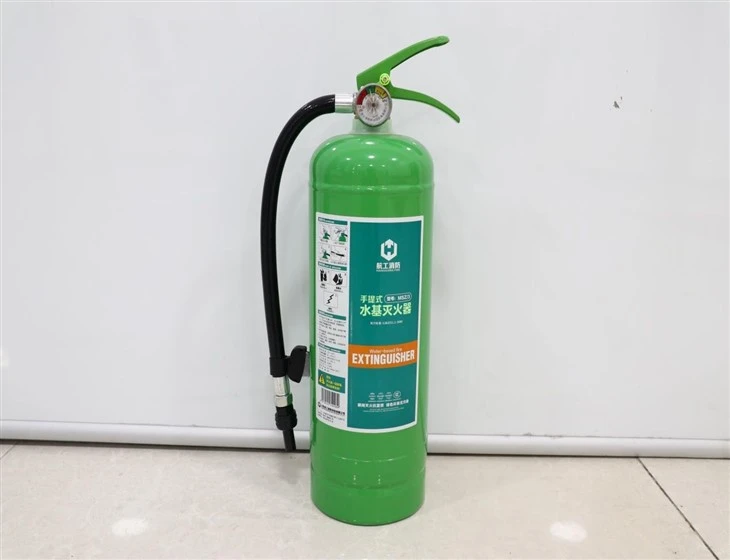
Typically, 1A fire extinguishers are relatively small and portable. They are designed to be used in the early stages of a fire to quickly suppress the flames before they spread. For example, a 2kg Water - based Fire Extinguisher 2kg Water - based Fire Extinguishe or a 3kg Fire Extinguisher 3kg Fire Extinguisher might fall into the 1A category. These extinguishers work by cooling the burning material and removing the heat element of the fire triangle (heat, fuel, and oxygen).
Fire Risks in Libraries
Libraries are filled with a large amount of combustible materials. Books, which are mainly made of paper, are highly flammable. In addition, there are often wooden shelves, desks, and chairs, which can also contribute to a fire. Electrical equipment such as computers, lighting systems, and charging stations pose another fire risk. Faulty wiring, overloaded sockets, or malfunctioning devices can spark a fire.
Another potential source of fire in libraries is human error. Smoking, improper use of candles or other open flames, and leaving electrical appliances on for extended periods can all lead to fires. Moreover, in some older libraries, the building's infrastructure may have outdated electrical systems or poor ventilation, increasing the fire risk.
Suitability of 1A Fire Extinguishers for Libraries
Advantages
- Portability: The small size and light weight of 1A fire extinguishers make them easy to move around the library. Staff and visitors can quickly access them in case of a fire emergency. For example, in a large - scale library with multiple floors and rooms, a portable 1A extinguisher can be carried to the location of the fire without much difficulty.
- Early - stage fire suppression: As mentioned earlier, 1A fire extinguishers are designed for the initial stages of Class A fires. In a library, where fires often start small, such as a book catching fire or a minor electrical spark, a 1A extinguisher can be used to quickly put out the flames before they spread to other areas.
- Cost - effective: Compared to larger and more powerful fire extinguishers, 1A fire extinguishers are generally more affordable. Libraries, which often have limited budgets, can purchase a sufficient number of 1A extinguishers to cover different areas of the building.
Disadvantages
- Limited capacity: The main drawback of 1A fire extinguishers is their limited capacity. In a large - scale fire in a library, where multiple sources of fuel are involved and the fire has spread, a 1A extinguisher may not be sufficient to extinguish the fire. For example, if a large section of the library's book collection catches fire, the small amount of extinguishing agent in a 1A extinguisher may be depleted quickly, leaving the fire still burning.
- Incompatibility with other fire classes: Libraries also face the risk of other types of fires, such as Class C fires (electrical fires) and Class F fires (cooking fires in library cafes). 1A fire extinguishers are only effective against Class A fires. Using a water - based 1A extinguisher on an electrical fire can be dangerous as it may conduct electricity and cause electrocution.
Complementary Fire Safety Measures in Libraries
While 1A fire extinguishers can play a role in library fire safety, they should not be the only measure. Here are some complementary fire safety measures that libraries should implement:
- Smoke detectors and fire alarms: Installing smoke detectors and fire alarms throughout the library is crucial. These devices can detect the presence of smoke or fire at an early stage and alert the staff and visitors, giving them more time to evacuate and call the fire department.
- Fire sprinkler systems: Fire sprinkler systems can automatically detect and extinguish fires. They are especially effective in large - scale fires. When a fire breaks out, the sprinklers release water, which can quickly cool the area and suppress the flames.
- Fire safety training: Staff and visitors should receive regular fire safety training. They should know how to use fire extinguishers correctly, how to evacuate the building in an orderly manner, and where the emergency exits are located.
- Diversified fire extinguishers: In addition to 1A fire extinguishers, libraries should also have fire extinguishers suitable for other fire classes. For example, CO2 extinguishers can be used for electrical fires, and wet chemical extinguishers can be used for cooking fires in cafes. A Motorhome Fire Extinguisher Motorhome Fire Extinguisher, which may have a broader range of applications, can also be considered.
Conclusion
In conclusion, a 1A fire extinguisher can be used in a library, especially for the early suppression of Class A fires. Its portability and cost - effectiveness make it a practical choice for libraries. However, due to its limited capacity and incompatibility with other fire classes, it should be part of a comprehensive fire safety plan. Libraries should combine 1A fire extinguishers with other fire safety measures such as smoke detectors, fire sprinkler systems, and diversified fire extinguishers to ensure the safety of the building and its occupants.
If you are a library manager or responsible for the fire safety of a library, and you are interested in purchasing 1A fire extinguishers or other fire - fighting equipment, please feel free to contact us for further discussion. We can provide you with professional advice and high - quality products to meet your fire safety needs.
References
- National Fire Protection Association. (2023). NFPA 10: Standard for Portable Fire Extinguishers.
- International Organization for Standardization. (2022). ISO 7165: Fire extinguishers - Requirements and test methods.
- Library Journal. (2021). Fire safety in libraries: Best practices and emerging trends.