

What are the components of an Ab Fire Extinguisher?
An AB fire extinguisher is a crucial safety device designed to combat Class A and Class B fires effectively. As a trusted supplier of AB fire extinguishers, I am well - versed in the components that make up these life - saving tools. In this blog, I will delve into the various parts of an AB fire extinguisher, explaining their functions and importance.
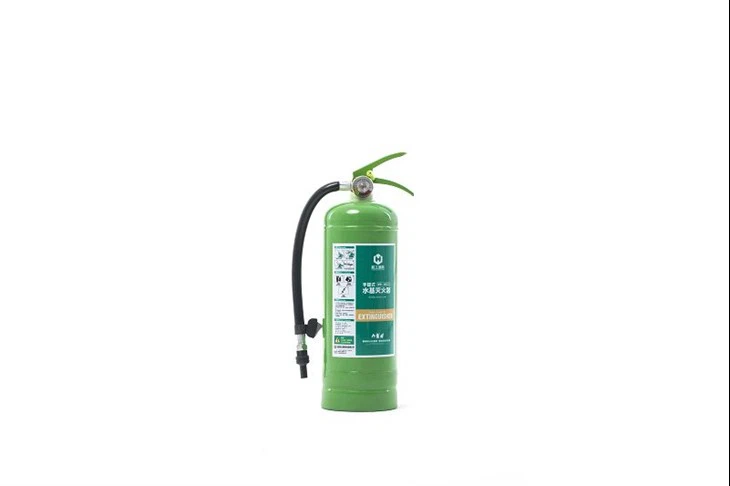

Cylinder
The cylinder is the outer shell of the fire extinguisher and serves as the container for the extinguishing agent and the propellant. It is typically made of high - strength steel or aluminum. Steel cylinders are known for their durability and ability to withstand high pressures. They are often used in larger fire extinguishers due to their robustness. Aluminum cylinders, on the other hand, are lighter, making them more portable. This is especially useful for smaller, handheld fire extinguishers that need to be easily maneuvered.
The cylinder must be able to withstand the internal pressure created by the propellant. Manufacturers subject cylinders to rigorous testing to ensure they meet safety standards. For example, hydrostatic testing is commonly performed to check the cylinder's integrity. This involves filling the cylinder with water and pressurizing it to a specified level to detect any leaks or weaknesses.
Extinguishing Agent
The extinguishing agent is the core component of an AB fire extinguisher. For Class A fires, which involve ordinary combustibles such as wood, paper, and cloth, and Class B fires, which involve flammable liquids like gasoline, oil, and grease, a suitable extinguishing agent is required.
One common type of extinguishing agent used in AB fire extinguishers is dry chemical powder. Dry chemical powders can be either monoammonium phosphate - based or sodium bicarbonate - based. Monoammonium phosphate is effective against both Class A and Class B fires. It works by forming a crust on the burning material, smothering the fire and preventing oxygen from reaching it. Sodium bicarbonate is mainly used for Class B fires. It releases carbon dioxide when heated, which displaces oxygen and extinguishes the fire.
Another option is a water - based extinguishing agent. Water is excellent for Class A fires as it cools the burning material below its ignition temperature. However, it is not suitable for Class B fires as water can spread flammable liquids. Some water - based extinguishers are enhanced with additives to improve their performance. You can learn more about A Fire Extinguisher and B Fire Extinguisher on our website.
Propellant
The propellant is responsible for expelling the extinguishing agent from the cylinder. In most AB fire extinguishers, compressed gases are used as propellants. Carbon dioxide (CO₂) and nitrogen (N₂) are the two most commonly used propellants.
Carbon dioxide is a popular choice because it is non - flammable and does not leave any residue after use. It works by displacing oxygen in the immediate vicinity of the fire, thus suffocating it. However, carbon dioxide has a relatively low boiling point, which means it can cause the fire extinguisher to become cold during discharge. This can be a concern in some applications.
Nitrogen is also widely used as a propellant. It is an inert gas, which means it does not react with the extinguishing agent or the surrounding environment. Nitrogen - propelled fire extinguishers are generally more stable and less affected by temperature changes compared to CO₂ - propelled ones.
Valve Assembly
The valve assembly is a critical component that controls the flow of the extinguishing agent. It consists of several parts, including the valve body, handle, and trigger.
The valve body is the main structure that houses the internal components of the valve. It is designed to withstand the high pressure inside the cylinder. The handle is used to operate the fire extinguisher. When the handle is squeezed, it activates the trigger, which opens the valve and allows the propellant to force the extinguishing agent out of the cylinder.
The valve assembly also includes a pressure gauge. The pressure gauge provides a visual indication of the pressure inside the cylinder. A properly functioning fire extinguisher should have a pressure reading within the recommended range. If the pressure is too low, it may indicate a leak or a problem with the propellant, and the fire extinguisher may not work effectively.
Discharge Hose and Nozzle
The discharge hose and nozzle are used to direct the extinguishing agent onto the fire. The discharge hose is a flexible tube that connects the valve assembly to the nozzle. It allows the user to reach the fire from a safe distance.
The nozzle is the end - piece of the fire extinguisher that shapes and directs the flow of the extinguishing agent. Different types of nozzles are available, depending on the application. For example, a straight - stream nozzle is suitable for reaching fires at a distance, while a fog - type nozzle is better for covering a larger area.
Portable foam fire extinguishers, which are also a type of AB fire extinguisher, have a special nozzle designed to create a foam blanket over the burning liquid. You can find more information about Portable Foam Fire Extinguisher on our website.
Safety Pin and Tamper Seal
The safety pin and tamper seal are important safety features. The safety pin is inserted through the handle of the fire extinguisher to prevent accidental discharge. It must be removed before the fire extinguisher can be used.
The tamper seal is a small device that indicates whether the fire extinguisher has been tampered with. If the tamper seal is broken, it may indicate that the fire extinguisher has been used or that someone has attempted to open it. In such cases, the fire extinguisher should be inspected by a qualified technician.
Maintenance and Inspection
Regular maintenance and inspection are essential to ensure the proper functioning of an AB fire extinguisher. Fire extinguishers should be visually inspected at least once a month. This includes checking the pressure gauge, looking for any signs of damage to the cylinder, hose, or nozzle, and ensuring that the safety pin and tamper seal are intact.
In addition to monthly visual inspections, fire extinguishers should be serviced by a qualified technician on a regular basis. This may involve refilling the extinguishing agent, replacing the propellant, and testing the valve assembly.
Conclusion
In conclusion, an AB fire extinguisher is a complex device composed of several key components. Each component plays a vital role in the fire - fighting process. From the cylinder that holds the extinguishing agent and propellant to the valve assembly that controls the flow, every part must work together seamlessly to ensure the effective suppression of Class A and Class B fires.
As a supplier of AB fire extinguishers, we are committed to providing high - quality products that meet or exceed industry standards. Our fire extinguishers are carefully manufactured and tested to ensure their reliability and performance. If you are in need of AB fire extinguishers for your home, office, or industrial facility, we invite you to contact us for a detailed discussion about your requirements. We can provide you with the right fire extinguishers and offer professional advice on installation, maintenance, and usage.
References
- NFPA 10: Standard for Portable Fire Extinguishers
- UL 711: Standard for Dry Chemical Extinguishing Agents
- ISO 11602 - 1: Portable fire extinguishers - Part 1: Requirements and test methods