

What is the shock - resistance of a 45kg fire extinguisher?
As a supplier of 45kg fire extinguishers, I often encounter questions from customers about the shock - resistance of these large - scale safety devices. Understanding the shock - resistance of a 45kg fire extinguisher is crucial for its proper use, storage, and transportation. In this blog, I will delve into the factors that affect the shock - resistance of a 45kg fire extinguisher and why it matters.
The Importance of Shock - Resistance
Fire extinguishers are not always used in ideal conditions. They may be dropped accidentally during installation, moved around in a hurry during an emergency, or jolted during transportation. A 45kg fire extinguisher, due to its size and weight, is more likely to experience significant shocks. If a fire extinguisher cannot withstand these shocks, it may develop leaks, damage to its internal components, or even rupture. This not only renders the fire extinguisher useless but can also pose a safety hazard to those nearby.
Factors Affecting Shock - Resistance
1. Material of the Cylinder
The material of the fire extinguisher cylinder is one of the most important factors affecting its shock - resistance. Most 45kg fire extinguishers have cylinders made of steel or aluminum. Steel cylinders are known for their high strength and durability. They can withstand a considerable amount of impact without deforming or cracking. Aluminum cylinders, on the other hand, are lighter, which makes them easier to handle, but they may have slightly lower shock - resistance compared to steel cylinders. However, modern manufacturing techniques have improved the strength of aluminum cylinders, making them a viable option for many applications.
2. Design and Construction
The design and construction of the fire extinguisher also play a crucial role in its shock - resistance. A well - designed fire extinguisher will have a reinforced base and top to absorb and distribute the impact energy. The shape of the cylinder can also affect its shock - resistance. For example, a cylindrical shape is generally more resistant to shock than a square or rectangular shape because it distributes the stress evenly around the circumference. Additionally, the way the internal components are mounted and secured within the cylinder can prevent damage during shocks.
3. Pressure Rating
The pressure rating of the fire extinguisher is another important factor. A fire extinguisher with a higher pressure rating will have a stronger cylinder to contain the pressure. This also means that it is likely to be more shock - resistant. However, it is important to note that a higher pressure rating also requires more careful handling and maintenance.
Testing the Shock - Resistance
To ensure the shock - resistance of 45kg fire extinguishers, manufacturers conduct a series of tests. One of the most common tests is the drop test. In this test, the fire extinguisher is dropped from a specified height onto a hard surface. The height and the surface are determined by international standards. After the drop, the fire extinguisher is inspected for any signs of damage, such as cracks, leaks, or deformation. If the fire extinguisher passes the drop test, it is considered to have adequate shock - resistance.
Another test is the vibration test. In this test, the fire extinguisher is subjected to a series of vibrations to simulate the conditions during transportation. The vibration frequency and amplitude are carefully controlled to ensure that the test is realistic. After the vibration test, the fire extinguisher is also inspected for any damage.
Applications and Considerations
1. Industrial Applications
In industrial settings, 45kg fire extinguishers are often used due to their large capacity. They may be moved around the factory floor, loaded onto trucks, or stored in warehouses. In these environments, the shock - resistance of the fire extinguisher is of utmost importance. For example, in a manufacturing plant, a fire extinguisher may be accidentally knocked over by a forklift. If it has good shock - resistance, it will remain intact and ready for use. You can find more information about large - scale fire extinguishers suitable for industrial applications on our Big Fire Extinguisher page.
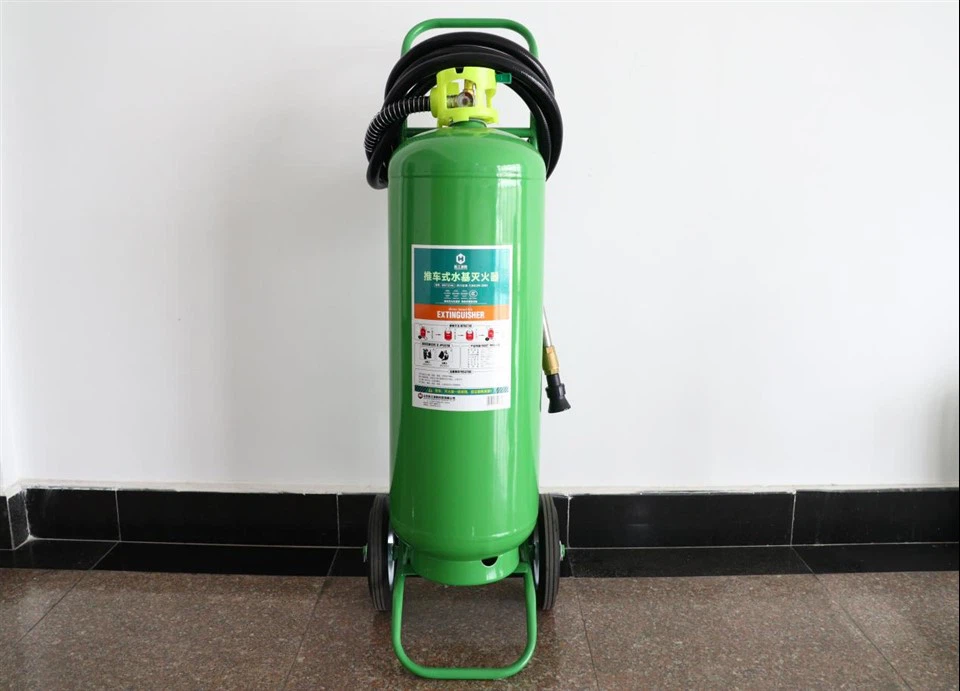

2. Garage and Workshop Applications
In garages and workshops, fire extinguishers are also essential. They may be subject to shocks when being moved around or stored in tight spaces. A 45kg fire extinguisher can provide a high level of protection in these areas. Our Garage Fire Extinguisher page offers models that are designed to withstand the shocks associated with these environments.
3. Emergency Response Vehicles
45kg fire extinguishers are sometimes used in emergency response vehicles. These vehicles are often driven at high speeds and may encounter rough roads. The shock - resistance of the fire extinguisher is critical to ensure that it remains functional during transit. Our Boosting Fire Extinguisher models are suitable for such applications.
Maintaining Shock - Resistance
Even if a fire extinguisher has good shock - resistance when it is new, proper maintenance is essential to keep it that way. Regular inspections should be carried out to check for any signs of damage, such as dents, scratches, or corrosion. If any damage is found, the fire extinguisher should be repaired or replaced immediately. Additionally, the fire extinguisher should be stored in a cool, dry place away from sources of heat and vibration.
Contact for Purchase and Consultation
If you are interested in purchasing 45kg fire extinguishers or have any questions about their shock - resistance, we are here to help. Our team of experts can provide you with detailed information and guidance on choosing the right fire extinguisher for your needs. Whether you are an industrial facility, a garage owner, or an emergency response organization, we have the products and knowledge to support you.
References
- International Organization for Standardization (ISO). Fire extinguishers - Part 1: Requirements and test methods for portable fire extinguishers. ISO 7165:2010.
- National Fire Protection Association (NFPA). NFPA 10: Standard for Portable Fire Extinguishers. 2018 Edition.