

What is the working principle of a wheeled fire extinguisher?
A wheeled fire extinguisher is an essential piece of safety equipment, especially for large - scale industrial, commercial, and public areas. As a well - established wheeled fire extinguisher supplier, I'm here to shed light on the working principle of these powerful devices.
Basic Components of a Wheeled Fire Extinguisher
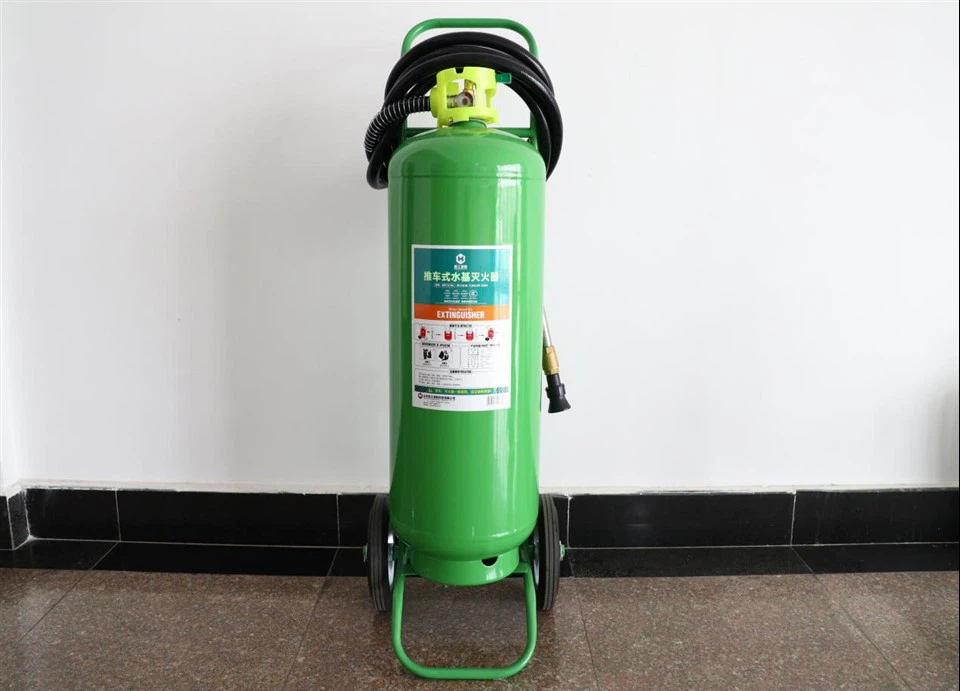
Before delving into the working principle, it's crucial to understand the key components of a wheeled fire extinguisher. It typically consists of a large - capacity cylinder, a pressure gauge, a discharge hose, a nozzle, a valve mechanism, and wheels for easy mobility. The cylinder is the heart of the extinguisher, storing the extinguishing agent under pressure. The pressure gauge allows users to monitor the internal pressure, ensuring the extinguisher is in proper working condition. The discharge hose and nozzle are used to direct the extinguishing agent towards the fire, while the valve mechanism controls the release of the agent.
The Physics Behind the Pressure
The operation of a wheeled fire extinguisher is based on the principle of pressure difference. Inside the cylinder, the extinguishing agent is stored under high pressure. This pressure is maintained by either a compressed gas or a chemical reaction that generates gas. For example, in some wheeled fire extinguishers, nitrogen gas is used to pressurize the system. When the valve is opened, the high - pressure gas forces the extinguishing agent out through the hose and nozzle.
The pressure is carefully calibrated to ensure that the extinguishing agent can be expelled with sufficient force to reach the fire, even from a distance. A proper pressure level also ensures a consistent and effective flow of the agent over the entire discharge time. If the pressure is too low, the agent may not reach the fire or may not be dispersed effectively. On the other hand, if the pressure is too high, it can cause the extinguisher to malfunction or even pose a safety risk.
Types of Extinguishing Agents and Their Working Mechanisms
Water - Based Agents
Water - based wheeled fire extinguishers are widely used, especially for Class A fires, which involve ordinary combustibles such as wood, paper, and cloth. The main working principle of water in extinguishing fires is cooling. When water is sprayed onto the fire, it absorbs a large amount of heat from the burning material. This reduces the temperature of the fuel below its ignition point, thereby extinguishing the fire.
Moreover, water can also create a barrier between the fuel and the oxygen in the air. As the water evaporates, it forms a steam layer that displaces oxygen, further helping to suppress the fire. If you are interested in water - based wheeled fire extinguishers, you can check out our Big Fire Extinguisher and 4a Fire Extinguisher.
Dry Chemical Agents
Dry chemical wheeled fire extinguishers are effective against multiple classes of fires, including Class A, B, and C fires. Class B fires involve flammable liquids such as gasoline and oil, while Class C fires involve energized electrical equipment.
The dry chemical powder in these extinguishers works by interrupting the chemical reaction of the fire. When the powder is discharged onto the fire, it forms a coating on the burning material, which inhibits the free - radical chain reaction that sustains the fire. This coating also smothers the fire by preventing oxygen from reaching the fuel.
Carbon Dioxide (CO₂) Agents
Wheeled fire extinguishers using carbon dioxide are mainly used for Class B and C fires. CO₂ is stored in a liquid state under high pressure inside the cylinder. When the valve is opened, the liquid CO₂ rapidly expands into a gas.
The main mechanism of CO₂ in extinguishing fires is suffocation. Carbon dioxide is heavier than air, so it displaces the oxygen around the fire. By reducing the oxygen concentration to a level below what is required to sustain combustion, the fire is extinguished. Additionally, the rapid expansion of CO₂ from a liquid to a gas absorbs heat, providing some cooling effect. Our Large Fire Extinguisher might be a great option if you are considering a CO₂ - based wheeled fire extinguisher.

Step - by - Step Operation of a Wheeled Fire Extinguisher
- Pull the Pin: Most wheeled fire extinguishers have a safety pin that prevents accidental discharge. Pull out this pin to enable the valve to be opened.
- Aim at the Base of the Fire: Point the nozzle or hose at the base of the fire, not at the flames. This is because the fuel source is at the base, and extinguishing the fuel is the key to putting out the fire.
- Squeeze the Handle: Once aimed, squeeze the handle to open the valve. This allows the pressurized extinguishing agent to be discharged through the hose and nozzle.
- Sweep from Side to Side: While discharging the agent, sweep the nozzle or hose from side to side to cover the entire area of the fire. This ensures that the extinguishing agent is evenly distributed over the burning material.
Maintenance and Safety Considerations
Proper maintenance is crucial for the reliable operation of wheeled fire extinguishers. Regularly check the pressure gauge to ensure that the pressure is within the recommended range. Inspect the cylinder for any signs of damage, such as dents or corrosion. The hose and nozzle should also be checked for blockages or leaks.
Safety is of utmost importance when using a wheeled fire extinguisher. Always follow the manufacturer's instructions and safety guidelines. Never use a damaged extinguisher, and make sure you are trained in its proper use. In case of a large or out - of - control fire, evacuate the area immediately and call the fire department.
Conclusion
In conclusion, the working principle of a wheeled fire extinguisher is a combination of pressure - based expulsion and the specific properties of the extinguishing agent. Whether it's cooling with water, interrupting the chemical reaction with dry powder, or suffocating with CO₂, these devices are designed to effectively combat different types of fires.
As a trusted wheeled fire extinguisher supplier, we offer a wide range of high - quality products to meet your safety needs. If you are interested in learning more about our wheeled fire extinguishers or are looking to make a purchase, we encourage you to reach out to us for a detailed discussion. Our team of experts is dedicated to providing you with the best solutions for your fire safety requirements.
References
- NFPA 10: Standard for Portable Fire Extinguishers. National Fire Protection Association.
- "Fire Protection Handbook". National Fire Protection Association.
- Manufacturer's manuals for various wheeled fire extinguishers.