

What types of electrical extinguishers are suitable for vehicles?
When it comes to vehicle safety, one crucial aspect that often goes overlooked is having a suitable electrical extinguisher on board. Vehicles are prone to electrical fires due to various reasons such as short - circuits, overheating of electrical components, and problems with the battery system. As an electrical extinguisher supplier, I understand the importance of choosing the right type of extinguisher for vehicles. In this blog, I will discuss the different types of electrical extinguishers that are suitable for vehicles.
Dry Chemical Extinguishers
Dry chemical extinguishers are one of the most common types of extinguishers used for electrical fires in vehicles. They work by smothering the fire and interrupting the chemical reaction that sustains it. There are two main types of dry chemical extinguishers: ABC and BC.
ABC dry chemical extinguishers are multipurpose and can be used on Class A (ordinary combustibles like wood and paper), Class B (flammable liquids such as gasoline and oil), and Class C (electrical fires). These extinguishers are filled with a fine powder that can quickly suppress the fire. In a vehicle, an ABC dry chemical extinguisher can be used not only for electrical fires but also for potential fires caused by fuel leaks or other combustible materials.
BC dry chemical extinguishers, on the other hand, are specifically designed for Class B and Class C fires. They are more effective in extinguishing flammable liquid and electrical fires. The powder in BC extinguishers is typically made of sodium bicarbonate or potassium bicarbonate. When discharged, it forms a barrier between the fuel and the oxygen, thus extinguishing the fire. For vehicles, a BC dry chemical extinguisher can be a great choice if you are mainly concerned about electrical and fuel - related fires.
One of the advantages of dry chemical extinguishers is their long shelf - life and relatively low cost. They are also easy to operate, making them suitable for vehicle owners who may not have extensive fire - fighting training. However, the powder residue left behind after use can be messy and may require thorough cleaning. You can learn more about a general dry chemical A Fire Extinguisher.
Carbon Dioxide (CO₂) Extinguishers
Carbon dioxide extinguishers are another excellent option for vehicle electrical fires. These extinguishers work by displacing oxygen, which is necessary for the fire to burn. CO₂ is a clean - extinguishing agent, meaning it leaves no residue after use. This is a significant advantage in a vehicle, as it reduces the risk of damage to sensitive electrical components and other parts of the vehicle.
CO₂ extinguishers are specifically designed for Class B and Class C fires. In a vehicle, they can effectively extinguish electrical fires without causing additional damage to the wiring or other electrical systems. They are also suitable for fires involving flammable liquids, which are common in vehicles.
However, CO₂ extinguishers have some limitations. They have a relatively short discharge time, usually around 8 - 15 seconds. This means that the user needs to be quick and accurate when using the extinguisher. Additionally, CO₂ is a compressed gas, and the extinguisher can be heavy and bulky, which may be a drawback for some vehicle owners. You can find more information about choosing the right extinguisher for different scenarios, including vehicles, in Best Fire Extinguisher for Kitchen, as the principles of fire - fighting are similar.
Halotron Extinguishers
Halotron extinguishers are a type of clean - agent extinguisher. They are similar to CO₂ extinguishers in that they leave no residue after use, making them ideal for protecting sensitive electrical equipment in vehicles. Halotron works by interrupting the chemical reaction of the fire, much like dry chemical extinguishers, but without the messy powder.
These extinguishers are effective for Class B and Class C fires. In a vehicle, they can quickly and safely extinguish electrical fires without causing damage to the vehicle's electronics, such as the dashboard, navigation system, and other on - board computers.
One of the main advantages of Halotron extinguishers is their low toxicity. They are also more environmentally friendly compared to some other extinguishing agents. However, Halotron extinguishers can be more expensive than dry chemical or CO₂ extinguishers. You can explore more about high - quality extinguishers like Halotron in Ab Fire Extinguisher.

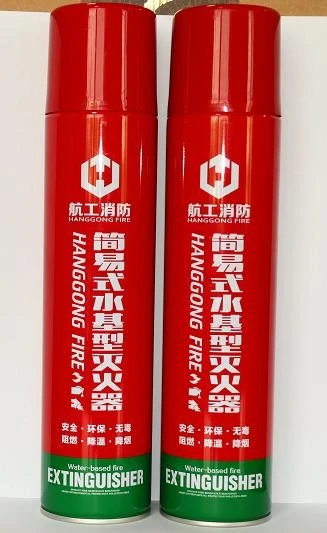
Water - Mist Extinguishers
Water - mist extinguishers are a relatively new type of extinguisher that is becoming more popular for vehicle use. They work by spraying a fine mist of water, which cools the fire and reduces the oxygen concentration. Unlike traditional water extinguishers, water - mist extinguishers can be used on electrical fires because the fine mist does not conduct electricity as effectively as a solid stream of water.
These extinguishers are suitable for Class A, B, and C fires. In a vehicle, they can be used to extinguish fires involving electrical components, as well as fires caused by ordinary combustibles or flammable liquids. Water - mist extinguishers are also environmentally friendly and leave little to no residue.
However, water - mist extinguishers may not be as effective in large fires as some of the other types of extinguishers. They also require regular maintenance to ensure that the misting mechanism works properly.
Factors to Consider When Choosing an Electrical Extinguisher for Vehicles
- Vehicle Type: Different vehicles have different fire risks. For example, a large commercial vehicle may have a higher risk of fuel - related fires, while a small electric car may be more prone to electrical fires. Consider the specific characteristics of your vehicle when choosing an extinguisher.
- Size and Portability: The extinguisher should be small enough to fit in the vehicle without taking up too much space. It should also be easy to carry and operate in case of an emergency.
- Fire Rating: Make sure the extinguisher has the appropriate fire rating for the types of fires you are likely to encounter in your vehicle. For electrical fires, look for extinguishers with a Class C rating.
- Maintenance Requirements: Some extinguishers require more maintenance than others. Consider how often you are willing to check and service the extinguisher to ensure it is in good working condition.
Conclusion
Having a suitable electrical extinguisher in your vehicle is an essential part of vehicle safety. Dry chemical, carbon dioxide, Halotron, and water - mist extinguishers are all viable options, each with its own advantages and disadvantages. As an electrical extinguisher supplier, I can provide you with high - quality extinguishers that meet your specific needs. Whether you are looking for an extinguisher for a small car, a large truck, or an electric vehicle, I have the right solution for you.
If you are interested in purchasing electrical extinguishers for your vehicles or have any questions about the different types of extinguishers, please feel free to contact me. I am happy to discuss your requirements and help you make the best choice for your vehicle safety.
References
- National Fire Protection Association (NFPA). NFPA 10: Standard for Portable Fire Extinguishers.
- Underwriters Laboratories (UL). UL 711: Standard for Dry Chemical Extinguishers.
- International Maritime Organization (IMO). Guidelines for the Use of Fire Extinguishers on Ships.