

Are 4a Fire Extinguishers suitable for commercial kitchens?
Are 4A Fire Extinguishers Suitable for Commercial Kitchens?
As a supplier of 4A fire extinguishers, I often get asked whether these extinguishers are suitable for commercial kitchens. It's a crucial question since the safety of a commercial kitchen environment depends heavily on having the right fire - fighting equipment. In this blog, I'll explore the characteristics of 4A fire extinguishers and evaluate their appropriateness for commercial kitchen settings.
First, let's understand what a 4A fire extinguisher is. The "4A" rating is a measure of the extinguisher's effectiveness against Class A fires. Class A fires are those that involve ordinary combustible materials such as wood, paper, cloth, and some plastics. These fires are characterized by the formation of glowing embers and can spread relatively quickly through the material.
4A fire extinguishers are designed to handle relatively large - scale Class A fires. They typically contain water or a water - based extinguishing agent, which works by cooling the burning material and reducing its temperature below the ignition point. This effectively stops the combustion process.
Now, let's turn our attention to commercial kitchens. Commercial kitchens are high - risk areas when it comes to fires. There are multiple potential fire sources, including stoves, ovens, deep - fryers, and electrical equipment. The types of fires that can occur in a commercial kitchen are diverse, mainly classified into three categories: Class A, Class B, and Class K.
Class A fires in a commercial kitchen can start from things like paper towels, cardboard boxes, or wooden utensils catching fire. These fires can be effectively tackled by a 4A fire extinguisher. The water - based agent in the 4A extinguisher can quickly douse the flames and prevent the fire from spreading further.
However, the real challenge in commercial kitchens lies in dealing with Class B and Class K fires. Class B fires involve flammable liquids such as cooking oils, grease, and alcohol. These fires can burn at high temperatures and spread rapidly. A 4A fire extinguisher, with its water - based agent, is not suitable for Class B fires. Water can cause the flammable liquid to splash and spread the fire, making the situation worse.
Class K fires are specific to commercial kitchens and involve cooking oils and fats at high temperatures. These fires require a special type of extinguishing agent designed to cool the oil, suppress the vapors, and create a barrier to prevent re - ignition. Once again, a 4A fire extinguisher is not the appropriate choice for Class K fires.
So, while a 4A fire extinguisher can handle Class A fires in a commercial kitchen, it cannot address the more common and dangerous Class B and Class K fires. To ensure comprehensive fire safety in a commercial kitchen, a combination of different types of fire extinguishers should be used.
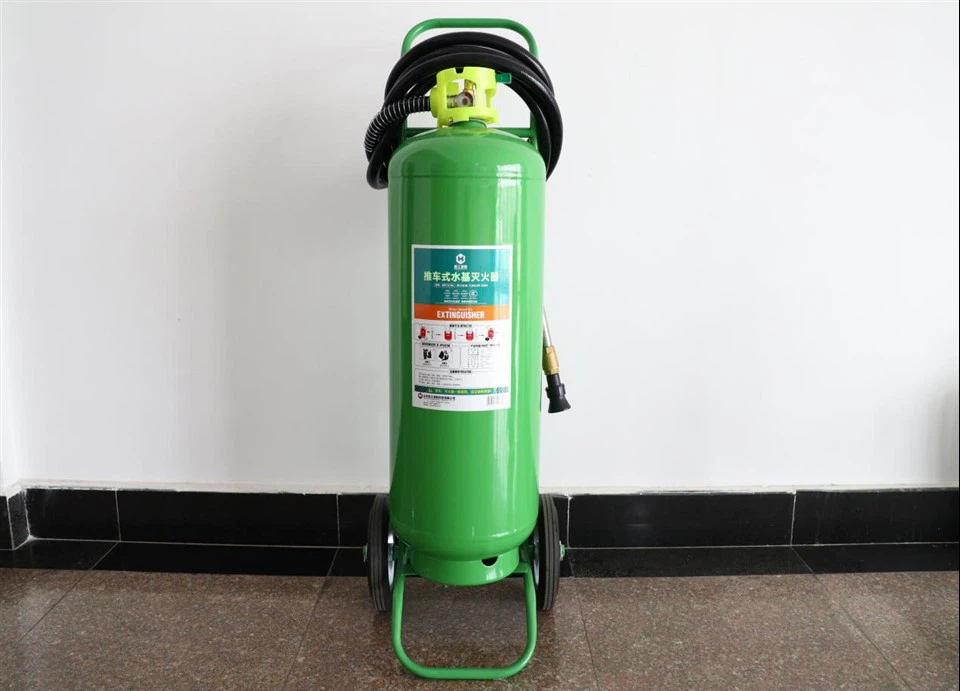
In addition to 4A fire extinguishers, it is essential to have Class B and Class K fire extinguishers readily available. For larger commercial kitchens, considering Wheeled Fire Extinguisher can be a good idea. Wheeled fire extinguishers can carry a larger volume of extinguishing agent, which is useful for dealing with more significant fires. They can be quickly wheeled to the location of the fire and provide a long - lasting stream of extinguishing agent.
For applications where a large - scale extinguishing capacity is required, 45kg Fire Extinguisher can be a viable option. These heavy - duty extinguishers are designed to handle large fires and can be very effective in a commercial kitchen environment if used appropriately. Similarly, Big Fire Extinguisher also offer a high - capacity solution for fire - fighting.
Despite the limitations of 4A fire extinguishers in dealing with all types of kitchen fires, they still have a place in commercial kitchens. They can be considered as a secondary line of defense for handling small Class A fires or as a backup option. They are relatively easy to operate and maintain, making them a practical addition to the overall fire - safety equipment in a commercial kitchen.

When installing fire extinguishers in a commercial kitchen, it is important to follow local fire safety codes and regulations. These codes often specify the types, quantity, and placement of fire extinguishers to ensure maximum safety. It is also advisable to conduct regular fire drills and training for kitchen staff so that they know how to use the fire extinguishers properly in case of an emergency.
To sum up, while 4A fire extinguishers can play a role in the fire - safety strategy of a commercial kitchen by handling Class A fires, they are not sufficient on their own. A comprehensive fire - safety plan for a commercial kitchen should include a combination of different types of fire extinguishers, including those suitable for Class B and Class K fires.
If you're in the process of setting up or upgrading the fire - safety equipment in your commercial kitchen, we're here to help. As a reliable 4A fire extinguisher supplier, we can offer you a wide range of fire - fighting solutions tailored to your specific needs. Contact us to discuss your requirements and let's work together to make your commercial kitchen a safer place.
References
- NFPA 10: Standard for Portable Fire Extinguishers
- FM Global Data Sheets on Fire Protection Equipment
- Local Fire Safety Codes and Regulations